What's Hidden in the Bean Sí's Comb (Banshee): Irish Folklore Art with Hidden Meaning
If you've read my last post about the Bean Sí's comb, you'll know why I liked this piece of Irish folklore so much. If you haven't, you can read it here: https://roisinmallonart.com/blog/bean-si-comb-banshee-irish-folklore
This post is about the drawing itself. Specifically, what's going on in it that you might not notice straight away.
It Started With a Simple Idea
I knew I wanted to draw a banshee comb, but I didn't want it to just be a normal comb. That seems very boring to me.
I wanted it to feel like it belonged to her, like it carried something of her in it.
And then it came to me - Ogham! What if her name was almost scratched into the handle?
Not engraved neatly, but worn in, as if she'd been using this comb for so long that something of her had worked its way into the wood itself.
The Ogham in the Handle
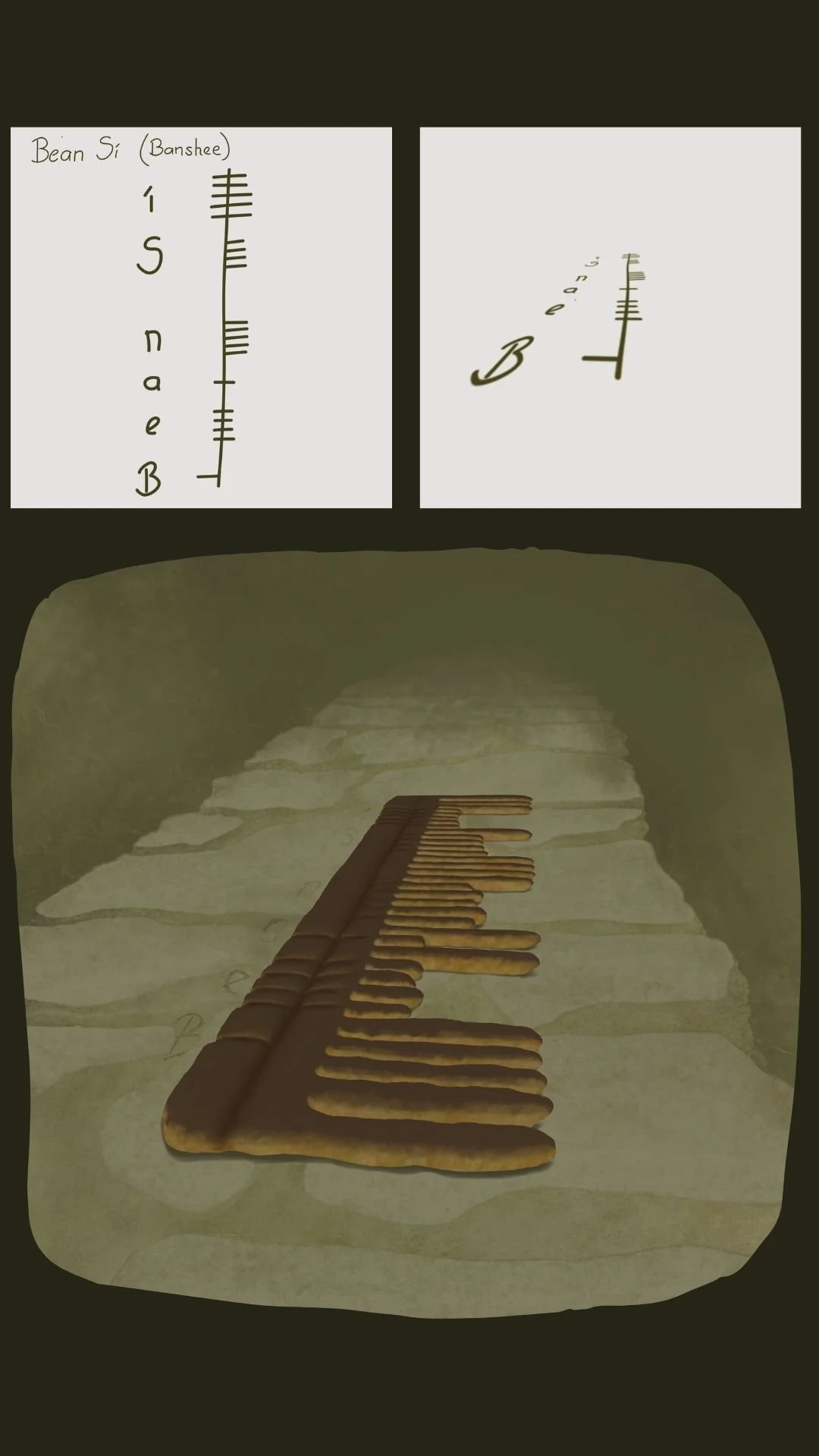
If you look closely at the handle of the comb, you'll see ogham carved into it where each stroke is part of a letter. Read bottom to top and it spells Bean Sí.
It felt like exactly the right language for something that belongs to the otherfolk, but more on that in a bit.
And that's kind of the point - if you know, you know.
What is Ogham?
Ogham is the oldest form of writing found in Ireland, used mostly between the 4th and 7th centuries. It consists of a series of lines and notches carved along a central stem line, and you'll find it on standing stones all across Ireland and parts of Britain.
It was used to mark territory, record names, and commemorate the dead. Most surviving ogham inscriptions are on stone, which is part of why they've lasted so long.
There is something about ogham that feels like it belongs to a completely different world, our ancient past and easy to walk past without noticing. That’s another reason why it feels right for this drawing.
If the Bean Sí was going to mark her property, she wouldn't do it obviously. She'd do it in the older language that she was more familiar with. The one most people wouldn't recognise even if they were looking straight at it.
Hidden in plain sight.
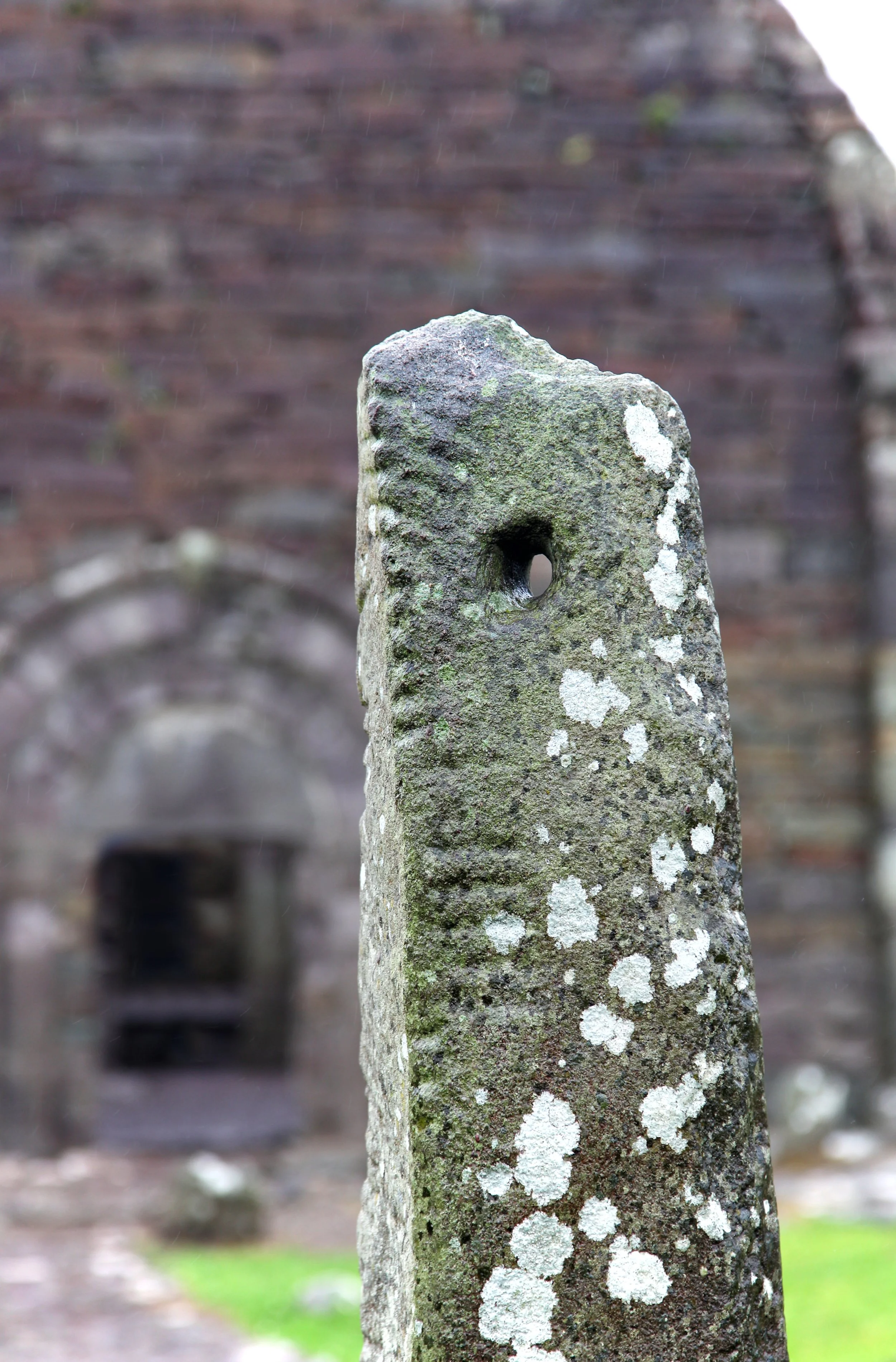
You'll find it on standing stones all across Ireland and parts of Britain
The Broken Teeth and What They Mean
Here's the detail that came together with a little help from you lot.
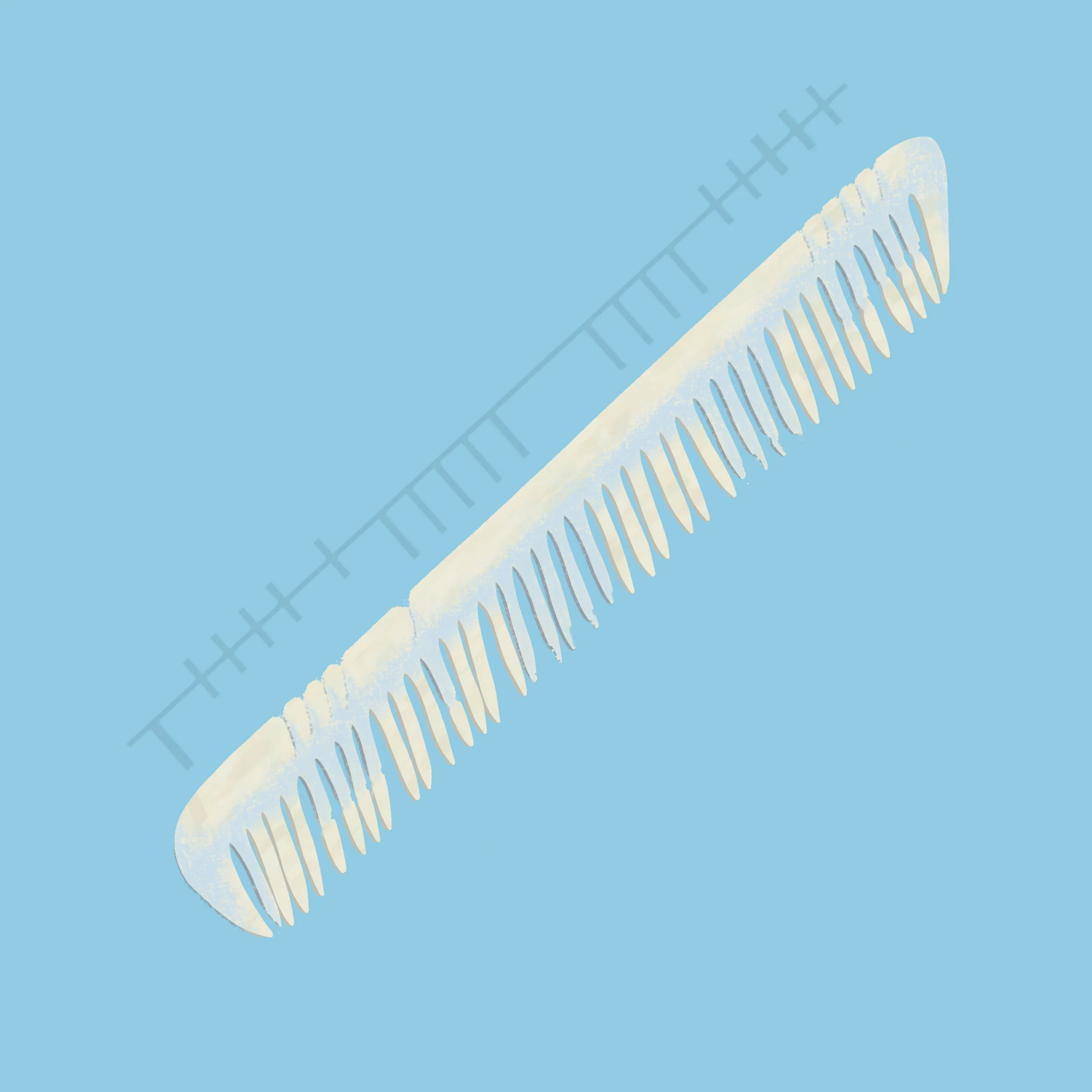
A while before I finished the drawing I shared this early version on social media. At that point the comb was going to be made of bone and the whole drawing was much lighter.
But the ogham was already in it, and I mentioned it was a Bean Sí's comb.
A few people commented saying they'd heard that a comb with broken or missing teeth was a sure sign it belonged to the Bean Sí. That rang bells for me too. I think I'd come across it somewhere as well, probably somewhere on Dúchas.ie.
When I heard that, I thought that was a perfect addition to the story of the comb and the story of my drawing.
So I gave the comb broken teeth. And then I thought, wouldn't it be even better if the teeth lined up with the ogham. So the comb itself is spelling out the name of the owner. Plain for all to see, IF you know what you're looking for.
That was the moment the drawing really clicked into place for me.
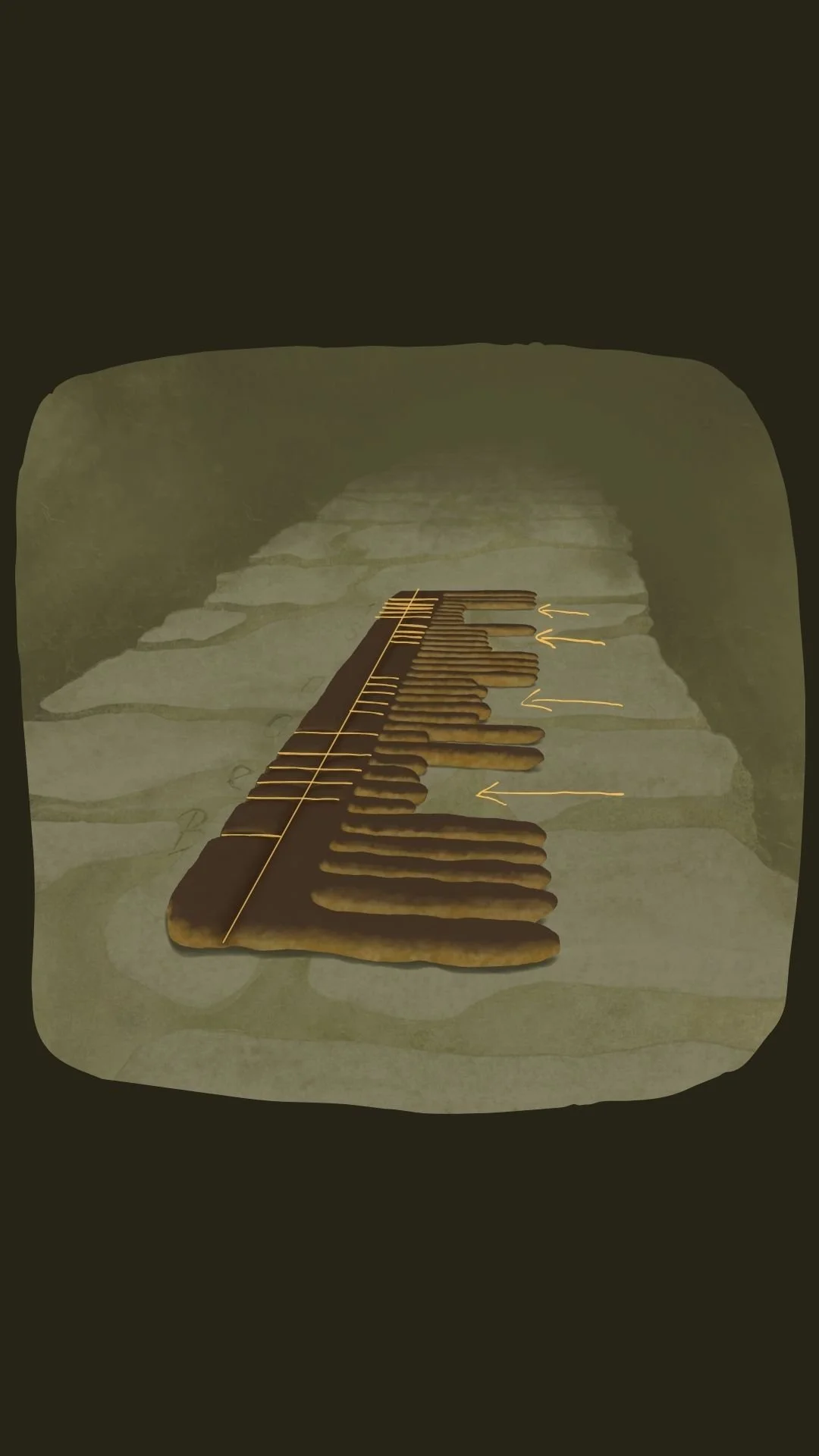
Those three broken teeth aren't accidental. In Irish folk belief, a comb with broken teeth is a Bean Sí's comb. And if you look closely, they line up with the ogham in the handle - even the teeth are spelling her name.
The Atmosphere
By the time I got to the final version the drawing had changed quite a bit from that early bone comb. The whole thing got darker, heavier and the comb became wood rather than bone.
I chose colours that are ambiguous, it could be night or it could be a very dark foggy day. I wanted that uncertainty.
The angle is deliberate too. You're looking down at the comb from above, as if you'd just spotted it while walking. As if you've stumbled across it on a stone wall outside somewhere.
Which is exactly the situation you do not want to be in, if you've read the last post.
The atmosphere is foreboding. I wanted it to feel like a warning before you even read the title. The whole image is doing the same job as the Irish folklore - telling you something without spelling it out.
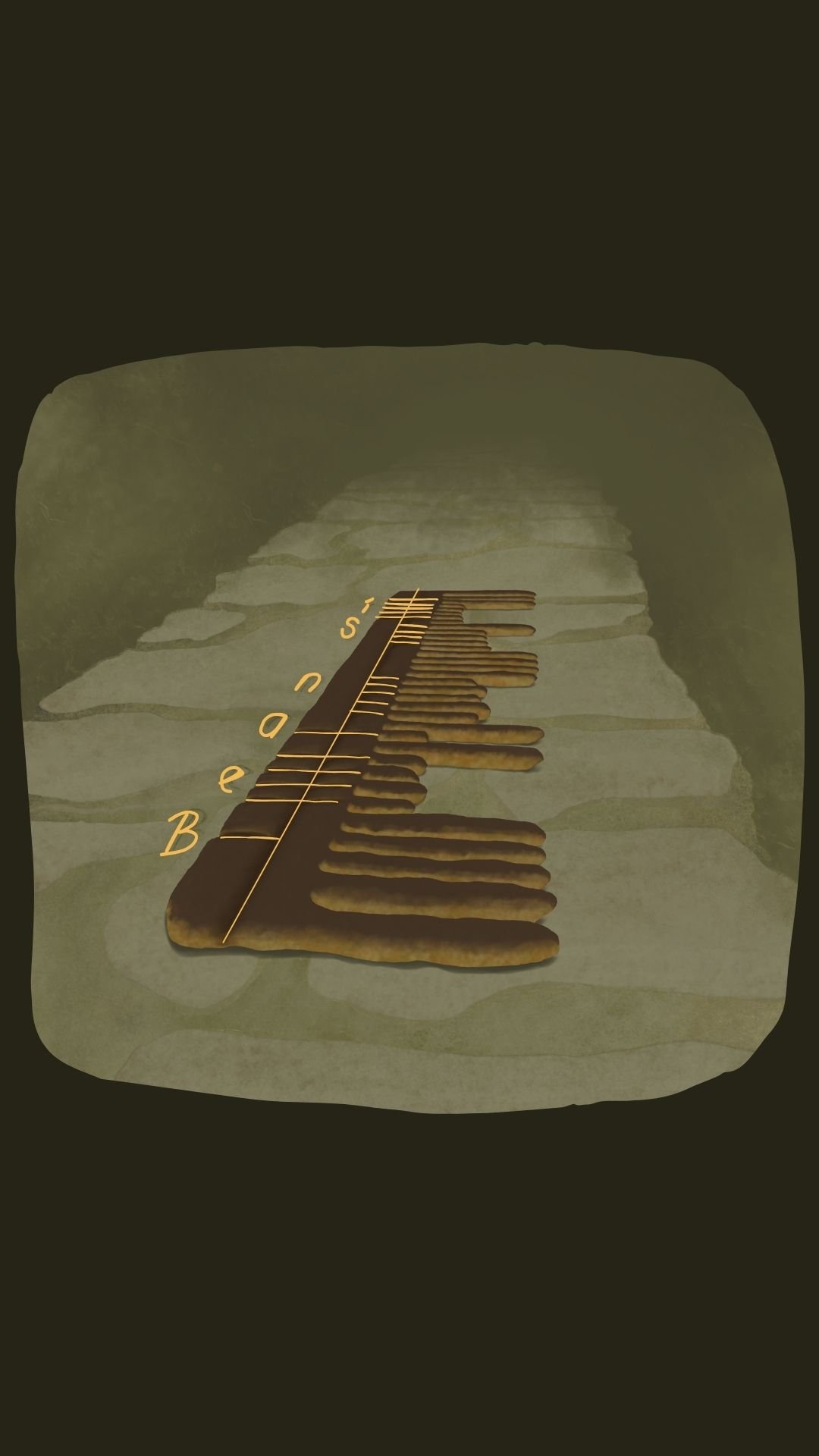
The Writing on the Stone
Finally, there's one more thing in there if you look for it.
Did you find it?… The words Bean Sí are written on the stone wall alongside the comb. Subtle enough that you might not catch it immediately. It's there for the people who look closely.
That's something I love doing with my artwork - layering in details that reward attention. Not everything needs to announce itself. A bit like the otherfolk, they're always there and you'll spot them IF you know what to look for.
If You Know, You Know
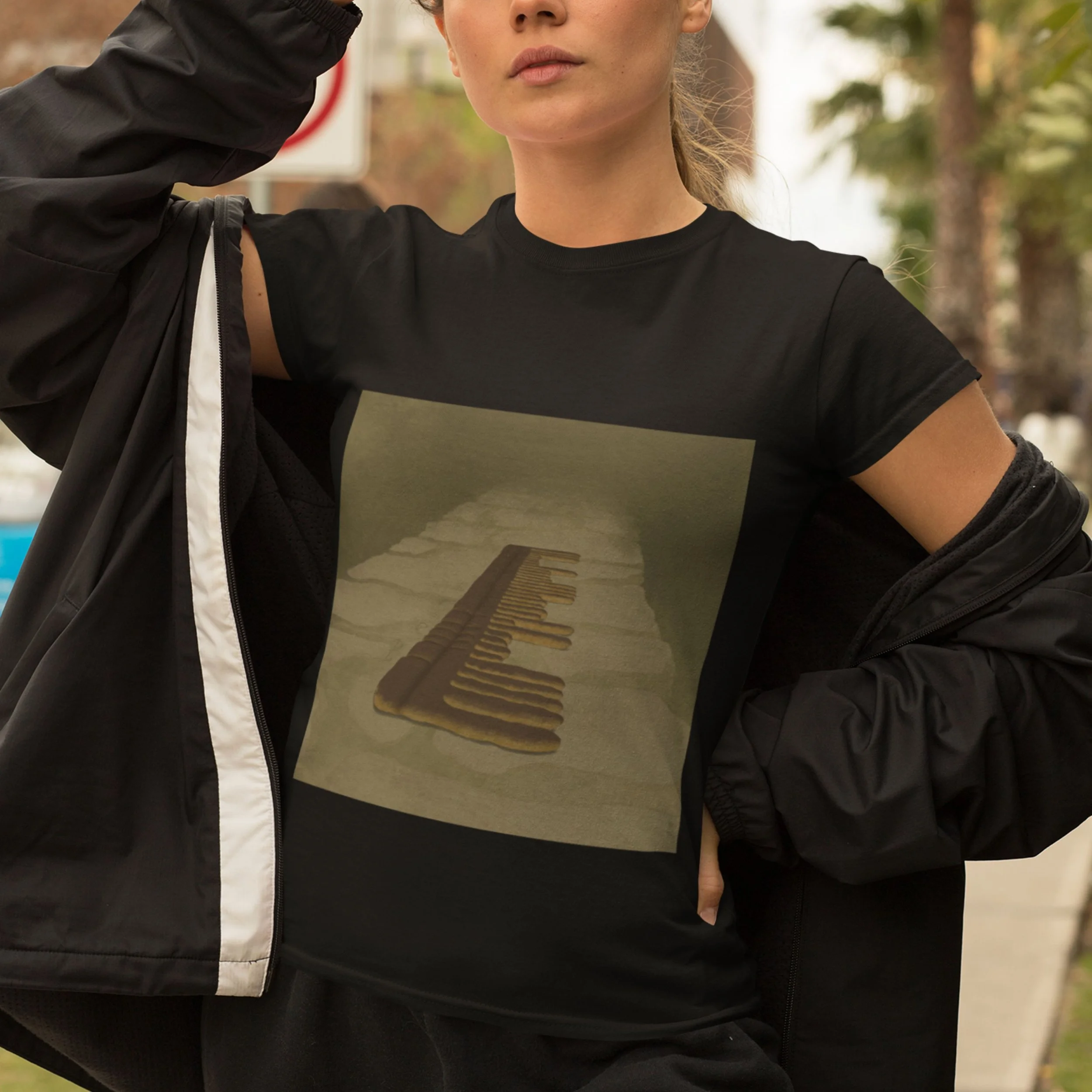
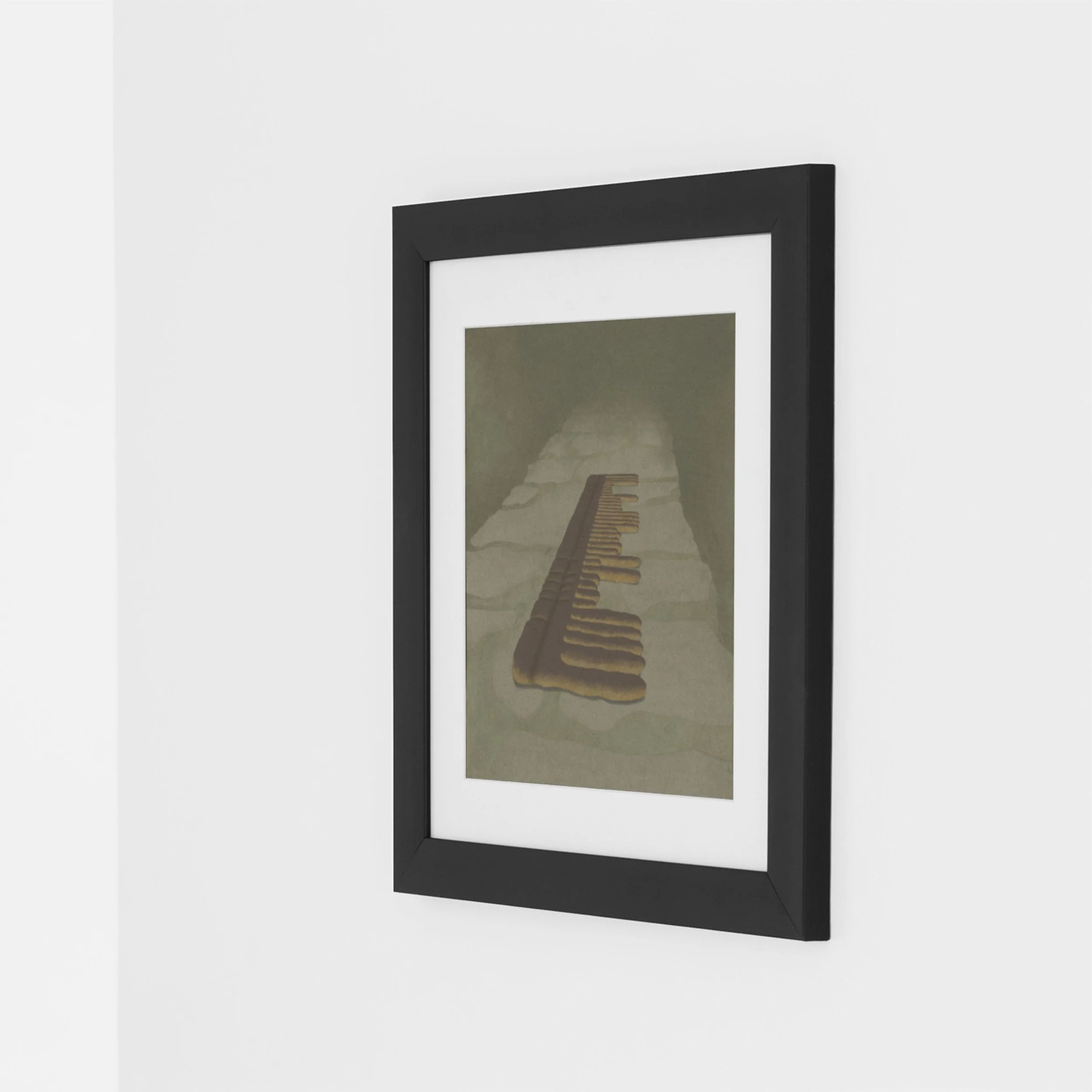
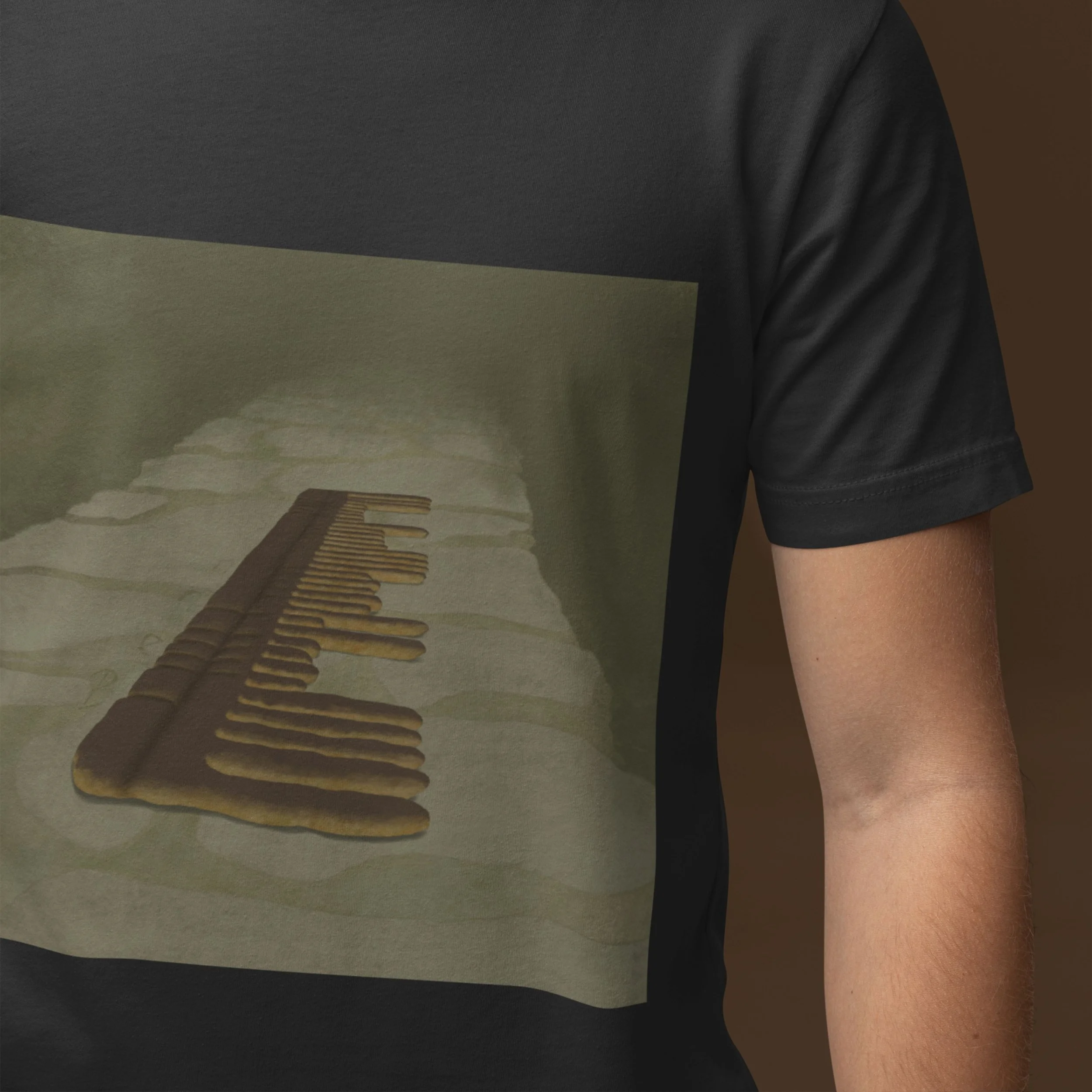
I love the idea of this Irish folklore art on a t-shirt or a print in someone's home because it works on two levels.
If you don't know the folklore, it's an odd, atmospheric image of a comb. Interesting enough and maybe a bit eerie.
But if you do know, if you know about the Bean Sí's comb and what it means to find one, that changes everything.
And if someone sees it on your t-shirt and asks about it, well, that's a lovely excuse to share a bit of Irish folklore with them.
And if they already know the story? Then you can show them the ogham, the broken teeth and the writing on the wall.
I like making the kind of art where there’s a deeper meaning to it, and maybe a story that might be a little bit hidden. So the people who look deeper get rewarded.
PS If you want more of this straight to your inbox, my free Fite Fuaite bundle is a good place to start. It's a collection of Irish art and printables, completely free when you join my newsletter. You can grab it here: subscribepage.io/failte