The Tailteann Games and the Ancient Roots of Iománaíocht (Hurling)
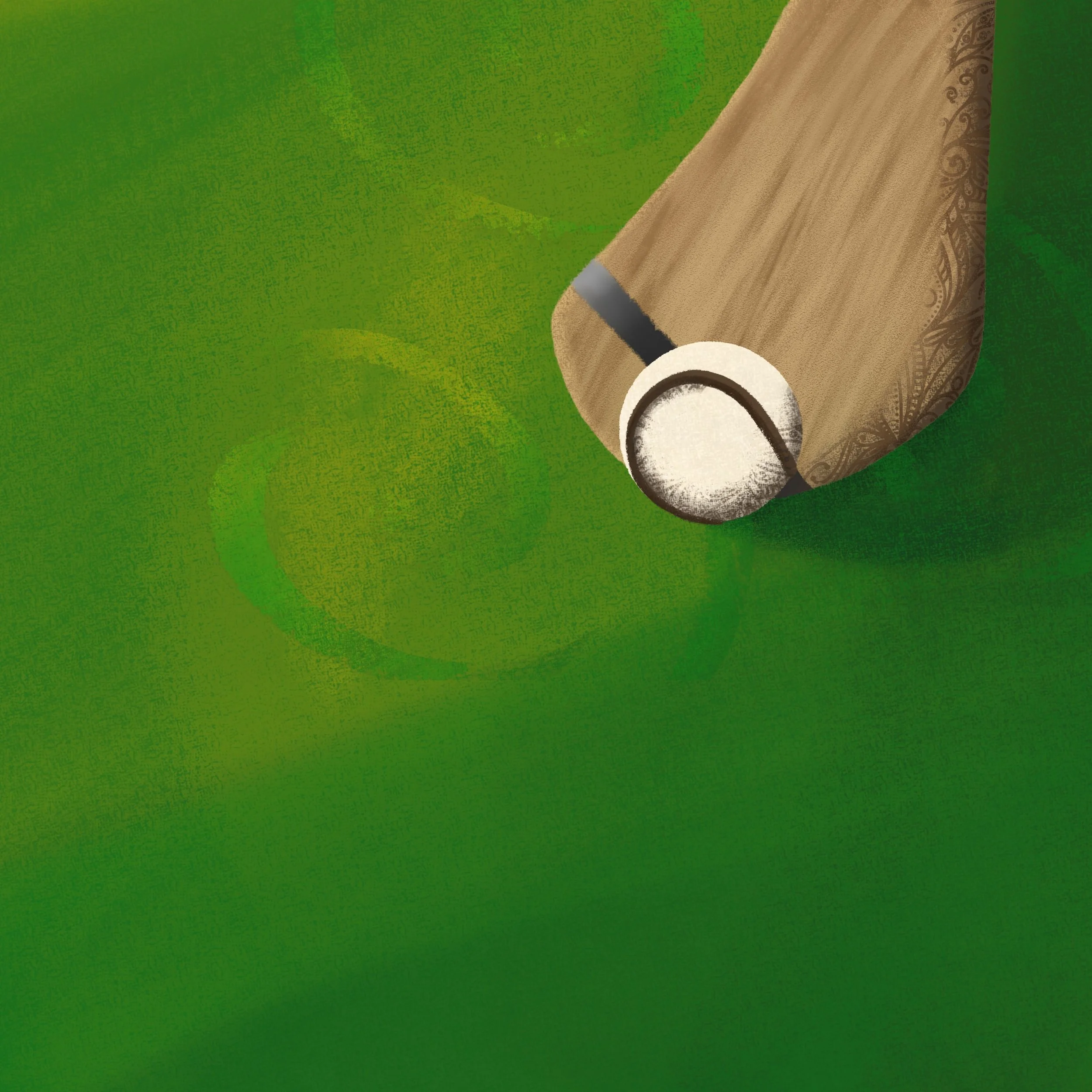
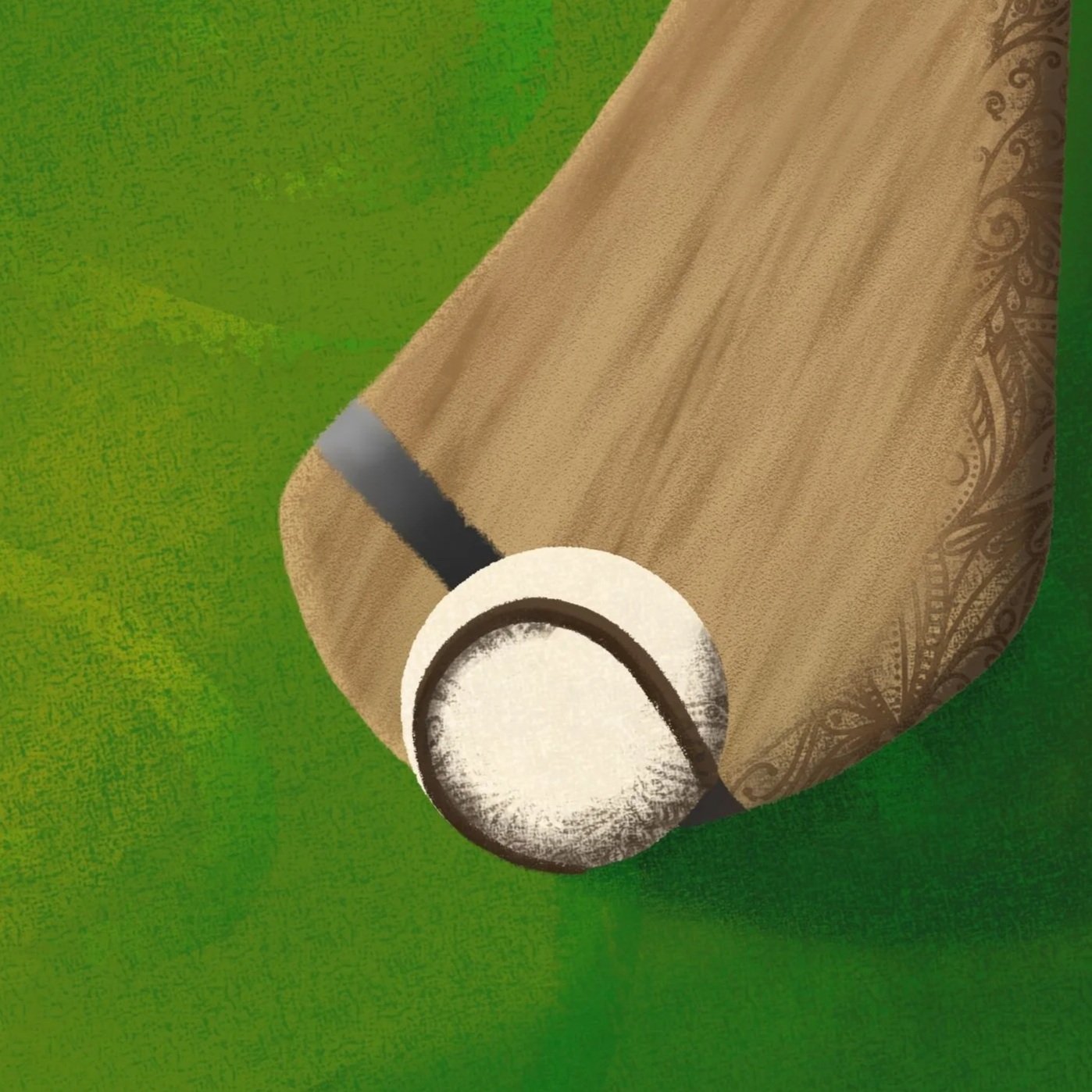
At first glance, my drawing is of a hurl and sliotar, caught mid-game. But look at where the hurl and sliotar meet the grass, and you'll see a Celtic triple spiral hidden there.
That's to reflect the link between the game as we know it today and the mythological Tailteann Games.
That's the idea behind this piece. Hurling is actually ancient, and it goes right back to our mythology. It's alive and is a very strong part of Irish daily life, and it always has been.
The funeral games
The story goes that Tailtiu, foster mother to the god Lugh Lámhfhada, died from exhaustion after clearing the land of Ireland for farming. Lugh grieved her so much that he founded the funeral games, a festival in her honour, held every year at the turn of summer into harvest.
That festival became Lughnasadh, and the games held as part of it became known as the Tailteann Games.
The old aonach, or assembly, brought people together for law-making, matchmaking, and mourning the dead, all alongside the athletic contests. Sport was just one part of the bigger festival.
Tailtiu's grave, in a field in Meath
In my research, I found that there's a mound in County Meath, in a field locals call the Crockins, that's said to be Tailtiu's grave.
I found an account of it on Dúchas.ie, written by a school pupil who'd heard it from someone in the area.
The mound was said to be heaped up by hand, with the earth carried in aprons by the old women of the area. It was dug from the places where lakes were then made for the games' swimming competitions.
The account even mentions the sound of "ológón," keening, rising from the mound for the queen who was lost.
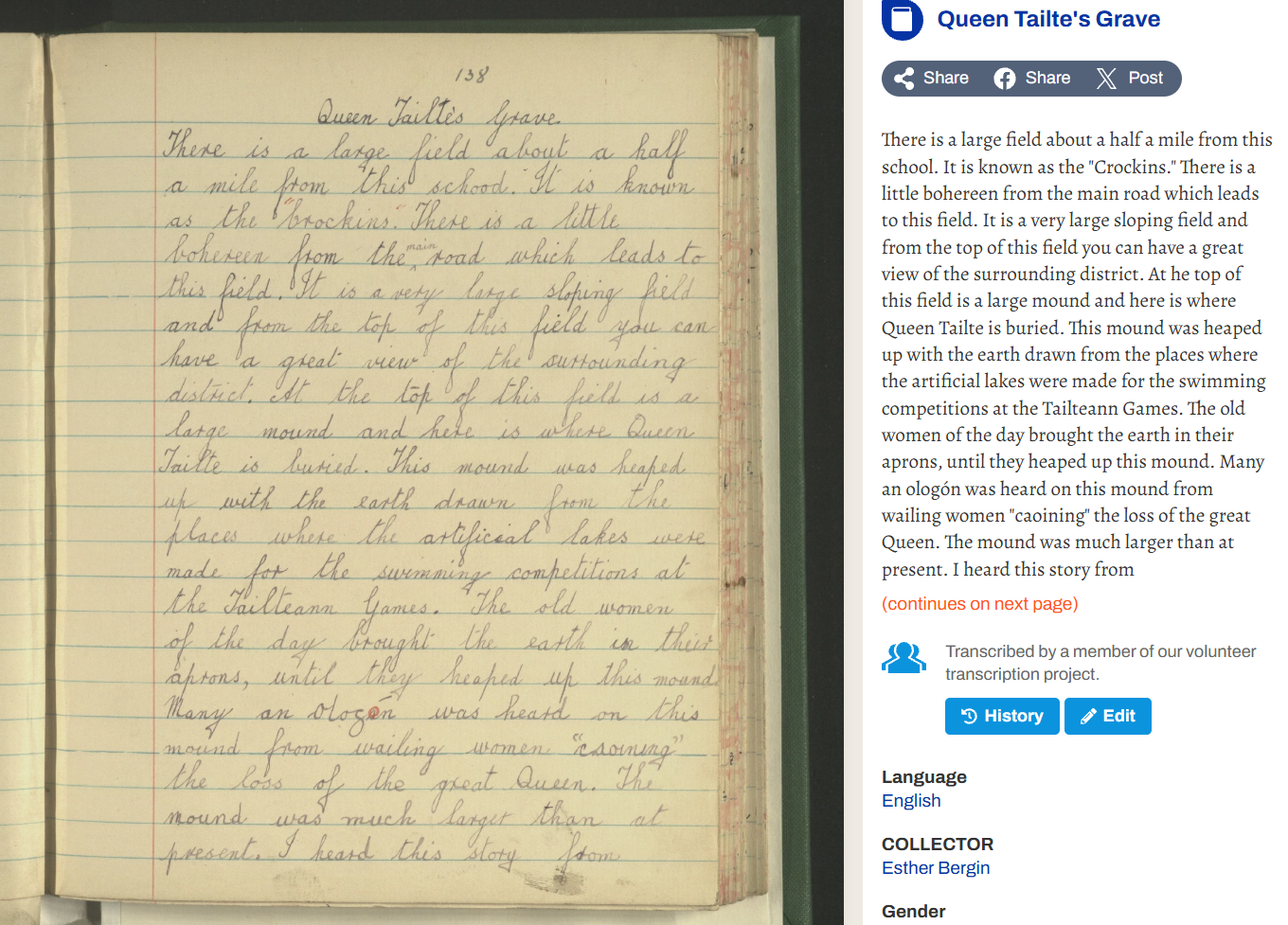
From the Dúchas.ie National Folklore Collection, a school pupil's account of the mound in County Meath said to be Tailtiu's grave.
Even Cú Chulainn had a hurl
Long before the Tailteann Games were part of any festival, hurling was already showing up in Irish myth. Setanta earned the name Cú Chulainn, the hound of Culann, after he killed Culann's guard dog with his hurl and sliotar and took on the job of guarding the place himself.
The game shows up again and again in the old stories as a way to show skill and discipline.
As an interesting aside, the Irish word for hurling itself is iománaíocht. Iomáint is an older version of this, and its roots are in the word iomáin, which literally means "driving." Old dictionaries use it both ways, driving cattle and driving a ball. Here, the same word is used for moving something forward with skill.
And then, it became real again
In the 1920s and 30s, the Tailteann Games were pulled out of myth and became real. Isn't that great!
One Dúchas account tells of a man from Coachford who competed at the Tailteann Games in 1932, and went on to break records in hammer and shot put across Ireland and further afield.
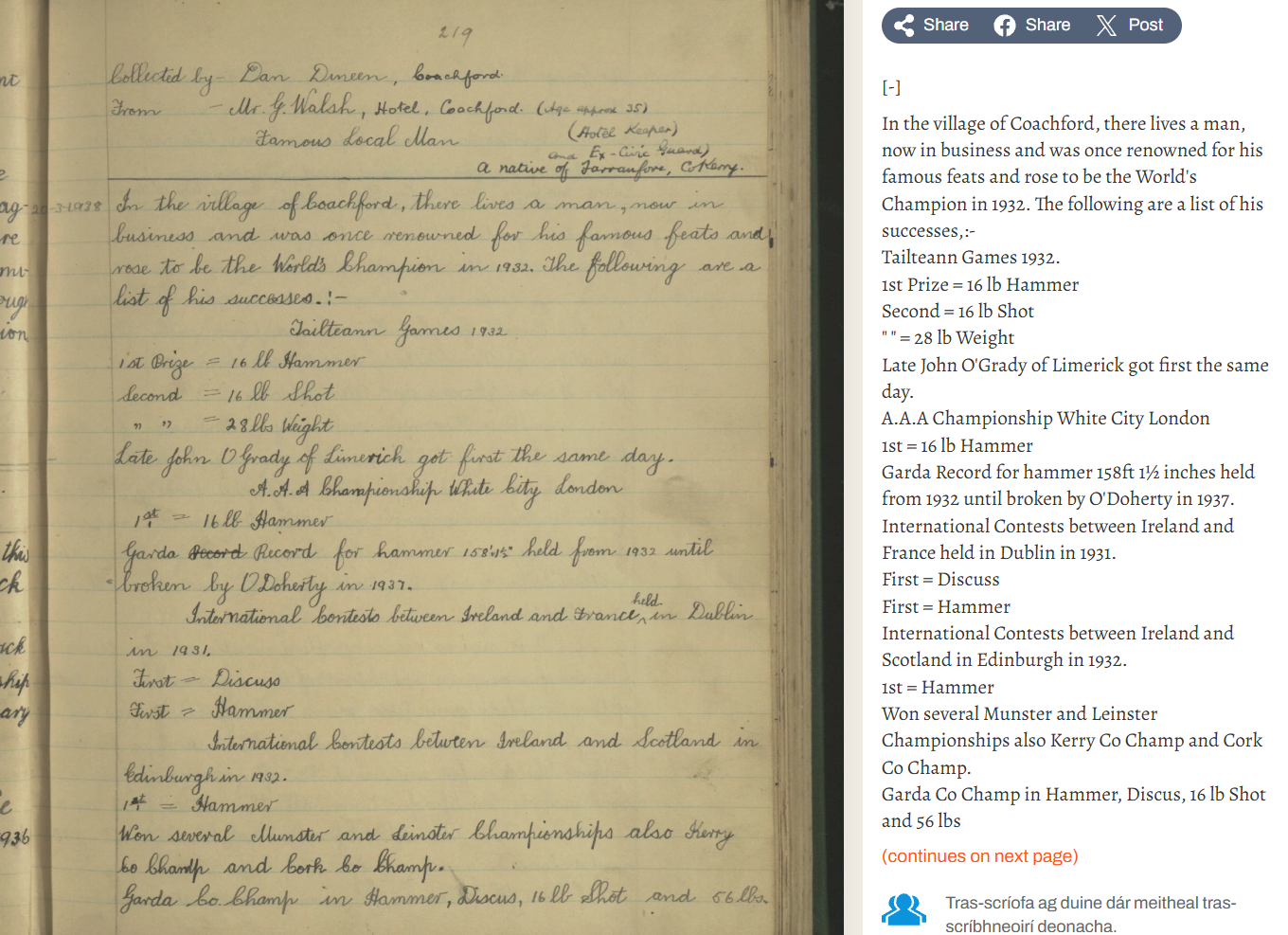
Also from Dúchas.ie, an account of a Coachford man who competed at the real Tailteann Games in 1932.
Both of those accounts came from the Dúchas.ie National Folklore Collection, a huge archive of stories, memories, and local history collected from schools all over Ireland. If you ever want to fall down a rabbit hole, it's well worth a search.
Why I drew it the way I did
That's the connection I was trying to capture in creating this piece. The myth came first, and then later, people picked it up and made it real.
The grass in the drawing is mostly still and ordinary, the way a field looks on any given day. It's only right where the hurl or sliotar meets the grass that the spiral appears, like something is rippling out from that one point of contact, an echo connecting back to a much older story.
I've hidden a little more in there too. If you look closely at the shadow along the edge of the hurl, and the shadow on the sliotar itself, you’ll see my swirling line art there.
That's something I do with most of my pieces - my line art is often in the shadows or background, indicating the existence or interaction with the otherworld. It's there to be found, but isn’t necessarily obvious at first glance.
(If you want a first look at pieces like this before they go anywhere else, that's exactly what my newsletter is for, it's where I share the final version of new drawings before they land on the blog or anywhere else.)
So what pulled me into this one was that connection between the mythological and the current day. A story that started with an Irish god and ended up with a real man from Coachford breaking hammer throw records in 1932. Isn't that a great story!
If you've read this far, you might like the Fite Fuaite bundle too. It's free when you join the newsletter - an art print, bookmarks with Irish phrases, and a colouring page. Grab it here: subscribepage.io/failte